Exploring 5 Layout Patterns with amazing Egyptian Limestone
Egyptian limestone should be the first thing that comes to mind when you require both elegance and durability. It is used in both commercial and residential projects because of its uniqueness and variety. Why not explore a few different patterns for Egyptian limestone? Consider the following examples Herringbone, French pattern, Staggered, Grid, and Diamond. Each pattern has different advantages and elegant design, also, they are applicable to different applications.
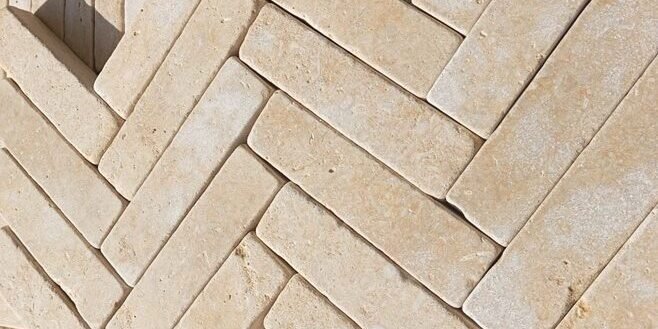
Herringbone Pattern
Herringbone is a classic choice that is used in a zigzag shape (V-shaped). Its name, “herringbone” ,refers to its similarity to the skeleton bone structure of the herring fish. It’s used in a specific arrangement to repeat the same shape using a rectangular block.
Herringbone Design
- Herringbone can have different designs. Most people will recognise the traditional one. This is the V-shaped or zigzag design. Not surprisingly the pattern gets its name from this design.
- Another design is achieved by inserting squares. This design is made from using traditional rectangular blocks followed by small squares.
- A third variation can be achieved simple by adding a square at each end of the rectangular tile.
- A fourth one is named skinny extra-long herringbone. It is made of a long rectangular tile, which makes a large zigzag form and can be utilised to cover larger areas.
- The fifth design is called double herringbone. This is laid in the same way as the traditional Herringbone pattern, but the main difference is that the rectangular tile is laid in pairs each time.
- The sixth one is block basket weave. It’s made by adding 4 rectangular tiles in one square placed horizontally in a square and then another square rotated 90 degrees vertically beside it.
- Design number 7 is a block basket weave with a square insert. It’s made by rectangular blocks added together in a woven way, like the basket woven with small square tiles are added between them.
- Design 8 is an arts and crafts basket weave. It’s made by adding a pair of rectangular tiles as alternatives, which adds a sense of art.
- Design 9 is called straight lay. The simplest design is adding rectangular tiles simply beside each other.
- Design 10 is a straight lay with a square insert. Another simple design is achieved by adding rectangular tiles with inserting small squares between them.
- Design 11 is ladder herringbone. This design is composed of different sizes of rectangular tiles. It’s created by adding them like the previous design, but with the insertion of small squares.
- Design 12 is called the dot and dash design. This design was created by adding small square tiles, which are called dots and rectangular tiles, which are called dashes, arranged in a rhythmic sequence. It is rather like Morse Code.
- Design 13 called double dot and dash. This design includes two dots, which are two small square tiles, and then adding a dash, which is a rectangular tile. A simple variation on the previous design.
- Design 14 is called chequered. This design is created by adding squares beside each other, but in different colours alternately.
- Design 15 is called a square chequered. It’s made by adding four small squares to form one square in a dark colour, then alternately, another four small squares to form one big square in a light colour.
- Design 16 is called plank and herringbone mix. It’s created by adding herringbone with plank making mix between linear and zigzag styles.
Benefits of the Herringbone
Visually: It provides any area with uniqueness and becomes interesting. It looks different than usual.
Versatility: Herringbone fits any place because of its different designs.
Enhanced Traction: Its texture helps in preventing slipping in wet areas.
Herringbone Sizes
It has different sizes that fit any project as follows:
- Popular size: 5 x 20 cm
The herringbone suits any area both outdoors & indoors.
French Pattern of Limestone
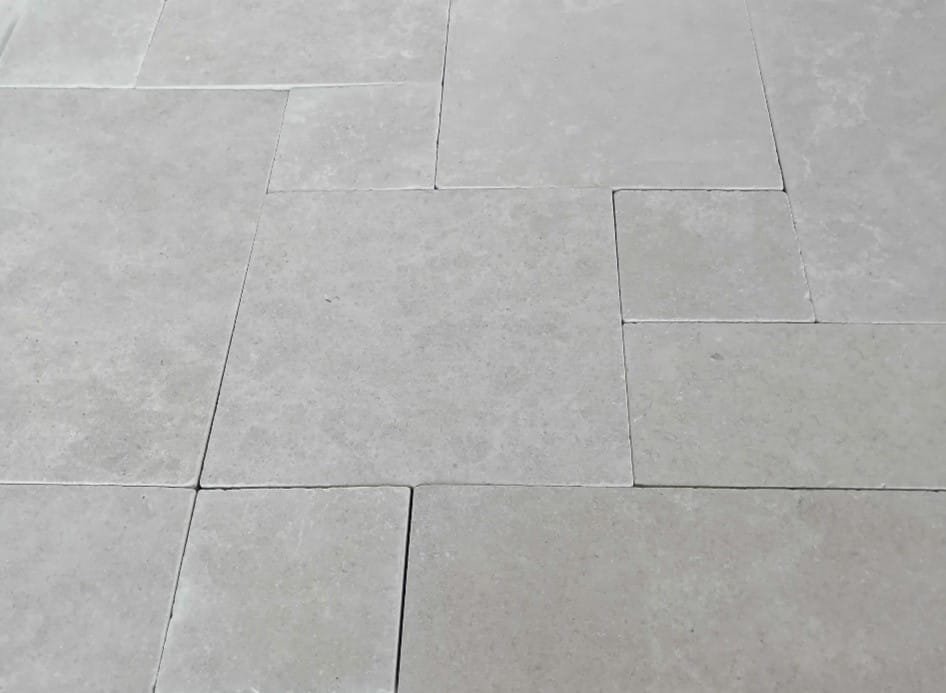
It is also known by a different name, which is the Versailles pattern. It to has varying sizes to suit all types of projects. The French pattern includes a combination of both small and large tiles.
sizes:
It has four different sizes:
- 20*20 cm
- 20*40 cm
- 40*40 cm
- 40*60 cm
Different designs of the French pattern
It has different design variations. These variations depend on some factors like the sizes of the tiles, their material type, and how they’re arranged.
Here are the different designs:
- Classic : This is the traditional one and the most common design in French pattern. It’s composed of a mix of both small and large tiles without clear straight lines, creating a “castle floor” look.
- Small : It’s like the previous design but smaller in size.
- Large : It’s formed with the same arrangement but with bigger tiles.
- Modified French Pattern: It’s created by making double rectangles, with narrower joints and mixed finishes.
- French Pattern with Borders: It’s composed of making a frame border around the repeating pattern using contrasting colour or a single-size tile.
Benefits of the French Pattern
Elegant design: provides a timeless, European touch that supports any indoor or outdoor area.
Different uses: Fits both modern interiors and classic outdoor areas.
Flexibility of the material: Works very well with limestone, marble, or porcelain.
Applications of the French Pattern
It is perfect for large areas, such as living rooms or dining areas. Also, for outdoor settings, such as patios and walkways. In addition ,It is popular in commercial areas, such as cafes and boutiques.
Grid Pattern
One of the most straightforward layouts for limestone is the grid pattern. It’s created by arranging tiles in a uniform rectangular or square pattern.
Grid Sizes:
- Standard Square Tiles
30×30 cm
40×40 cm
60×60 cm
80×80 cm
100×100 cm
- Rectangular Tiles
30×60 cm
40×80 cm
60×120 cm
- Mixed sizes: For example: 60×60 cm with 30×60 cm
Designs of the Grid Pattern
- Square Grid, also called straight grid
It’s composed of aligning all the tiles both vertically and horizontally, creating a checkerboard appearance.
- Vertical Grid
This can be used to emphasize height. It’s created by adding rectangular tiles on top of each other.
- Horizontal Grid
An alternative to the Vertical is created by adding rectangular tiles side by side to give a long-lines look.
- Diagonal Grid
It’s formed by square tiles that are rotated 45°, forming a diamond-shaped layout.
- Mixed-size Grid
This design simply includes different tile sizes.
Benefits of the Grid Pattern
- Simplicity: It’s easy to maintain and install the grid pattern. This feature makes it a perfect choice for many homeowners.
- Flexibility: It can fit different sizes and shapes of tiles, which makes it suitable for customization.
Applications:
It is applicable for kitchens and bathrooms. It also suits commercial environments.
Staggered Pattern
The staggered pattern (offset pattern) is composed of a brickwork layed formation.
Staggered Design
It provides a natural brickwork look. It’s created by offsetting each row of tiles from the one above.
Staggered sizes
It uses tiles of the same size or mixed lengths
Single size: like 600×300 mm or 400×200 mm, laid with a half offset.
Mixed sizes: composed of different lengths (e.g., 600 mm, 400 mm, 200 mm), creating a more random and natural look.
Staggered Benefits
Durability: It can be more resistant, as the staggered joints help distribute weight loads more evenly.
Appeal: It looks like classic stonework and adds a touch of elegance to any space.
Applications for the Staggered Pattern
It works well in walkways, driveways, and patios. Inside, such as kitchens and hallways, where durability is paramount.
Diamond Pattern
It is created by arranging tiles in a diamond shape, giving a bold and unique look. It is done with square or rectangular tiles, depending on the style of the project.
Size :
Simply created by using square tiles in various sizes like 300×300 mm, 400×400 mm, or 600×600 mm, rotated 45 degrees to form the diamond shape.
Benefits of the Diamond Pattern
- Unique Design: It provides a different focal touch to any area.
- Unique Style: It is used in various design styles, in both modern and traditional styles.
Applications of the Diamond Pattern
It is a perfect choice for indoor areas. It can also be used in outdoor spaces, such as patios or garden paths.
Conclusion
Egyptian limestone provides a wide range of installation options, each with its unique benefits and aesthetic appeal. By considering the specific requirements of your project and the desired look, you can choose the perfect pattern to create a beautiful environment.
Proper installation techniques and maintenance practices will ensure your limestone remains stunning for centuries.